
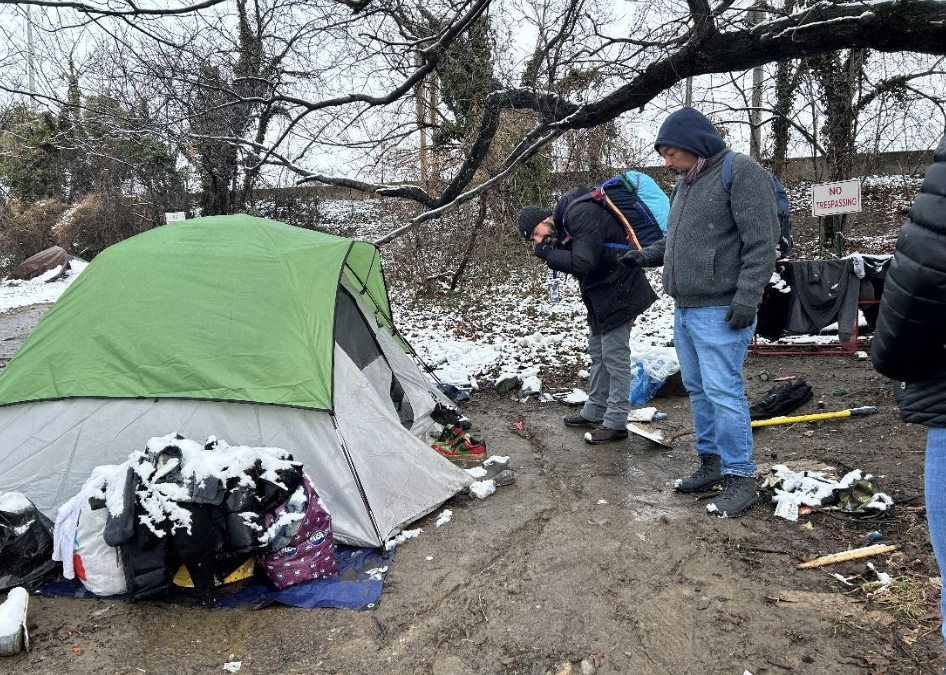
On May 26, I had the privilege of attending a Lunch & Learn at Health Care for the Homeless (HCH) in Baltimore’s Fallsway Clinic on behalf of the Apollo Homelessness Collaborative. The presentation, led by Dr. Jimmy Miller, Director of Outreach Services, and John Lane, Outreach Services Manager, provided a compelling look at the evolution and impact of street medicine in Baltimore.
Street medicine emerged from the simple but powerful idea that healthcare providers must go where people are. The movement began in the 1990s when physicians and outreach teams recognized that many people experiencing unsheltered homelessness faced overwhelming barriers to accessing traditional healthcare. Rather than waiting for patients to come to clinics, street medicine brings care directly to encampments, abandoned buildings, underpasses, and other places where vulnerable individuals live. There is more to it than just being there, although Dr. Miller had numerous examples of the value of consistently showing up. It is also recognized that many of the homeless have experienced trauma from the healthcare system and genuinely do not feel safe walking into a clinic or Emergency Department for care.
Healthcare for the Homeless has long embraced this philosophy. Its mobile clinic program, launched in 2015, serves communities throughout Baltimore City and Baltimore County, providing low-barrier, relationship-based care to individuals experiencing homelessness and other barriers to healthcare. In 2025, HCH formally launched its street medicine program, expanding its ability to deliver medical care, harm reduction services, substance use treatment, testing, and referrals directly in the field.
The need is profound. Baltimore’s unique landscape includes more than 16,000 vacant and abandoned properties, and many unsheltered residents live in hidden locations throughout the city. Historical factors, including redlining and decades of disinvestment, continue to shape the neighborhoods where outreach teams work today.
The research presented was equally compelling. Studies show that people sleeping rough experience mortality rates up to ten times higher than the general population, while street medicine programs have demonstrated reductions in emergency department utilization, improved behavioral health outcomes, increased retention in addiction treatment, and greater access to healthcare.
Baltimore’s results already reflect this promise. Since launching, HCH’s street medicine and outreach teams have recorded more than 1,500 combined encounters and engaged 290 unique patients. Remarkably, approximately 80 percent of patients seen in 2025 were new to HCH, demonstrating the program’s ability to reach individuals who might otherwise remain disconnected from care. Beyond the data, the presentation reinforced a simple truth: meaningful change begins with relationships, trust, and the willingness to meet people where they are.
The event also provided an opportunity to connect with several members of HCH’s leadership team. I enjoyed speaking with CEO Kevin Lindamood about the organization’s vision and continued growth, and with Director of Development Christina Bauer, who introduced me to members of her expanding team, including new Major Gifts Officers Lindsay Rowell and Libby Farrel. These conversations reinforced the importance of partnership and collaboration across the nonprofit sector. This kind of collaboration is why Apollo was created – and why Healthcare for the Homeless is such an important partner!