How Mila, Sal, and Mike turned honey lemonade into help for Apollo
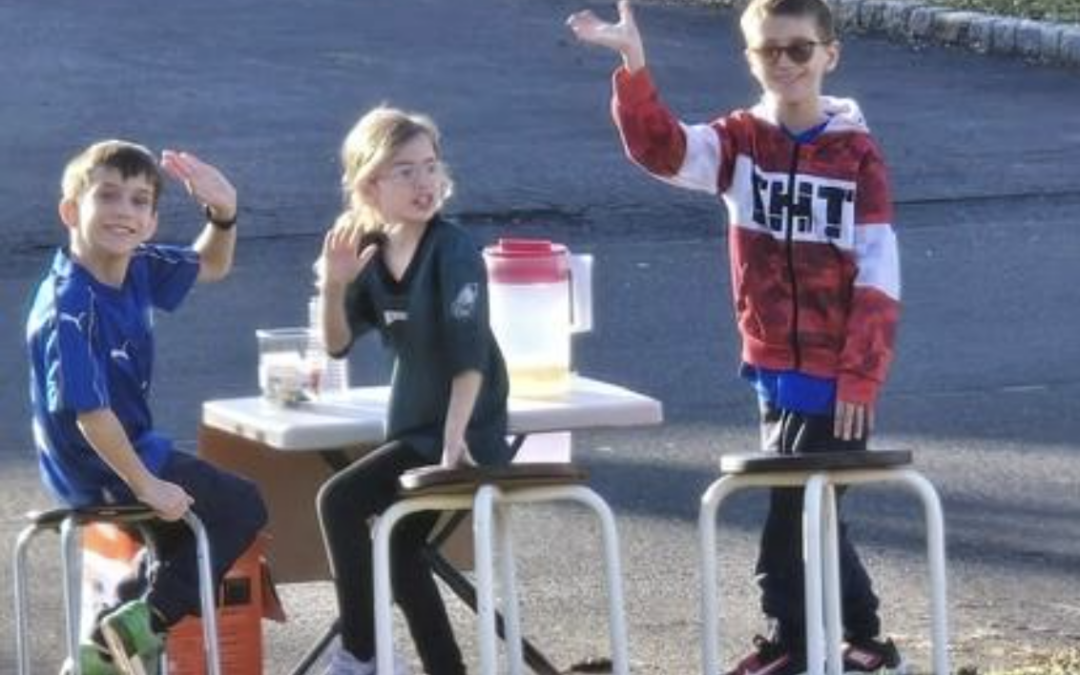
On a sunny afternoon, Mila, Sal, and Mike set up a folding table, a handmade sign, and a bright pitcher of honey lemonade with a simple invitation: “Pay what you can.”
There was no set price and no complicated fundraising plan. Just three kids, a neighborhood stand, and a generous idea: maybe a cup of lemonade could help someone who needed it.
Mila, Sal, and Mike are the grandchildren of Dottie, a board member of the Apollo Homelessness Collaborative. Through her, they have learned that homelessness is not just a problem “out there.” It affects real people, families, and neighbors. So they decided to do something small, sweet, and meaningful.
By the end of the day, their lemonade stand had raised $75 for Apollo.
Seventy-five dollars may sound modest when measured against the scale of homelessness. But one of the lessons of Apollo’s work is that every gift can become part of a larger web of care. And when you look at what Apollo’s partner organizations can do with specific amounts, $75 starts to look very real.
At Health Care for the Homeless, $25 can provide bus transportation for 12 people to get to appointments. That means the $75 raised by Mila, Sal, and Mike could help 36 people get where they need to go for care. For someone without reliable transportation, a bus ride can be the difference between missing an appointment and receiving medical, dental, behavioral health, or supportive services.
At People Encouraging People, $75 could provide three sleeping bags, three hygiene kits, or a combination of basic supports such as a warm-weather clothing set and a hygiene kit. It also comes close to the $80 needed for one night of bridge shelter — a hotel room that can offer someone an immediate safe place to stay. These are not abstract services. They are practical comforts and supports that can help someone get through the next day, the next night, or the next step toward stability.
At Franciscan Center Baltimore, $25 can help one person with documentation assistance. That means $75 could help three people take care of documents that may be necessary for housing, benefits, employment, identification, or other essential services. Paperwork may not sound dramatic, but for someone trying to rebuild stability, having the right documents can open important doors.
That is what made this lemonade stand so powerful. Mila, Sal, and Mike were not just selling drinks. They were practicing generosity. They were learning that helping does not have to wait until you are older, wealthier, or in charge of a large organization. Sometimes helping begins with a pitcher, a hand-lettered sign, and the belief that neighbors will respond.
Their $75 will not solve homelessness by itself. But it can help people get to appointments, receive basic supplies, stay warm, find temporary shelter, or secure important documentation. It can join with other gifts and become part of something bigger.
Most of all, it reminds us that every cup counts. Every dollar counts. And when small hands act with big hearts, they can help move a whole community toward compassion.